

How To Keep Your Feet Warm While Skiing
There's a lot to love about resort skiing: You can cram in a ton of runs per 24-hour interval, always take the convenience of a gild nearby, and don't take to hoof it up thousands of vertical feet to earn your turns. That said, the biggest challenge with skiing inbounds is trying to stay warm while standing in long lift lines, sitting on wet chairlifts, and putting in less effort on groomers. To assistance, nosotros've created a list below of our favorite ways to stay cozy and comfy all day long—from how to layer properly to tips on drying out your gear overnight. For all of our favorite picks in one place, see our detailed ski gear reviews.
one. Layer Upwards With The Right Insulation
Ski Jacket and Ski Pant
Your first line of defense force against the cold is your ski jacket, which ranges from heavily insulated options to non-insulated hardshells. For those who run common cold or ofttimes ski in frigid climates, an insulated ski jacket is a bully choice. In addition to a waterproof outer layer, these models pack either downward or synthetic insulation nether the crush (or sometimes both). The downsides are less breathability and versatility when the atmospheric condition turns balmy, simply it's a great way to stay warm on common cold days. Our favorite insulated resort jacket this season is the Helly Hansen Alpha 3.0, which uses a mix of 80-gram (1000) and 60g synthetic fill for warmth. Paired with a quality midlayer (more on that below), y'all should be in good shape on most resort days. For maximum coziness, the Arc'teryx Macai (which is insulated with 750-make full down and 100g and 60g synthetic in moisture-prone areas) may be the warmest ski jacket on the marketplace..jpg)
Many expert-level resort skiers and those who hit the backcountry prefer a not-insulated hardshell or softshell ski jacket. In this example, much of your warmth comes from your midlayer rather than your outer layer. We love uninsulated shells for their versatility: You tin layer liberally underneath during the depths of winter and strip downward to just the jacket and calorie-free baselayer when leap skiing rolls around. Hardshells offer the ultimate in weather condition protection, while softshells generally aren't every bit impervious to the elements simply provide better mobility and overall comfort. Some performance ski jackets at present come up with a mix of both.
In add-on to insulation, current of air and moisture seeping through your jacket tin can be a quick ticket to getting common cold. When shopping for a ski shell, Gore-Tex models generally offering the best long-term wind and water protection and outperform about in-house alternatives (although there are a number of quality options, including Patagonia's H2No Functioning Standard). Even regular Gore-Tex provides a healthy barrier confronting the elements, and for the toughest of conditions without having to resort to a beefy and thick construction, premium Gore-Tex Pro leads the charge and is establish on high-end ski jackets like the Patagonia PowSlayer and Arc'teryx Blastoff SV. You will pay for the privilege, but the longevity and proven current of air and moisture-conditions protection of Gore-Tex are second to none..jpg)
Concluding but not least, your ski pant selection can have an impact on warmth as well. Well-nigh people focus on the upper body more than the lower, and the insulated ski pant options are more limited than the jacket counterparts, just that shouldn't stop you from staying cozy. If you've already settled on a jacket, cheque to see if that brand makes an insulated pant to match (or a like pick). For example, Patagonia offers both shell and insulated versions of their Pulverisation Town Pants, and Arc'teryx's nautical chart-topping Macai Pant offers comparable warmth to the jacket mentioned to a higher place. And for a adept budget option, The Northward Confront Liberty comes in an insulated version for just $169. However, like jackets, many skiers clothing uninsulated ski pants, which are quite thick, and focus on a warm baselayer instead. With a prissy pair of thick merino wool thermals and ski socks on the lower portion of your legs, most people won't need the extra warmth—plus information technology gives you a boost in mobility.
Midlayer
In addition to your ski jacket, your midlayer takes on a good clamper of the important insulating duties. In terms of staying warm, the more than midlayer the better, and you lot have three insulating options to choose from: down, constructed, and fleece. For frigid temperatures, you lot can't beat out the lofty warmth of a down jacket. Lightweight options similar the Arc'teryx Cerium LT and Patagonia Down Sweater are two of our favorite midlayers considering they easily fit under a ski trounce and keep us cozy in most conditions (not to mention they work well for summertime backpacking and around-boondocks use, also). For even more warmth, midweight downwardly jackets similar the Arc'teryx Cerium (no "LT") and Rab Microlight Tall pack in more down. A heavyweight downward slice similar the Rab Neutrino Pro is a winter-fix downwards jacket that might be tempting for skiing, but information technology's too beefy to layer under a vanquish.
Using a synthetic jacket as a midlayer offers better breathability and performance when wet. Yous won't get the same warmth-to-weight ratio as downwards, and synthetics don't pack downward as small, only they are much better equipped at dumping heat when exploring the sidecountry or whatever hike-to tall terrain. Plus, unlike down, which loses its ability to insulate when wet, synthetics won't clump up and will keep to keep you reasonably warm. In this category, our summit pick is the Patagonia Nano-Air for its impressive condolement and overall versatility. Finally, fleece generally is the nigh affordable type of midlayer, is able to resist moisture, and dries chop-chop. But the insulating capabilities of fleece largely depend on its thickness, and warmth is fairly limited unless y'all get a very bulky design, which is why we don't recommend information technology for those who run cold..jpg)
Baselayer
Last only not to the lowest degree, your baselayer is the next-to-peel garment that pulls wet away from your body and regulates your core temperature. Merino wool and polyester are the two most common baselayer materials, with merino being more expensive but amend at wicking moisture and incredibly soft against the skin. Polyester, on the other hand, is cheaper and more durable than wool but not equally comfortable or scent-resistant. Our favorite baselayer is the Smartwool Classic Thermal 1/4-Nada, which is made of 100% merino wool. For those who run cold, we've been very impressed past Woolx's merino offerings—they're more often than not thicker than the competition merely incredibly cozy and warm. The Woolx Glacier Long Sleeve has kept united states of america cozy in some exceptionally cold weather.
ii. No Cold Feet: Ski Socks and a Proper Boot Fit
The good news is that ski boots, and kick liner technology in particular, have improved dramatically in recent years. The outcome is that modern boots are better insulators and far more comfy than in years past, and you no longer demand thick, heavy-duty ski socks (or layer multiple pairs). In fact, it's all-time to opt for a high-quality lightweight sock and nail the ski kicking fit part of the equation (more on this below). Our favorite ski sock for 2022-2023 is the Smartwool Ski Targeted Absorber OTC, which is made mostly with merino wool and offers a overnice combination of performance and comfort.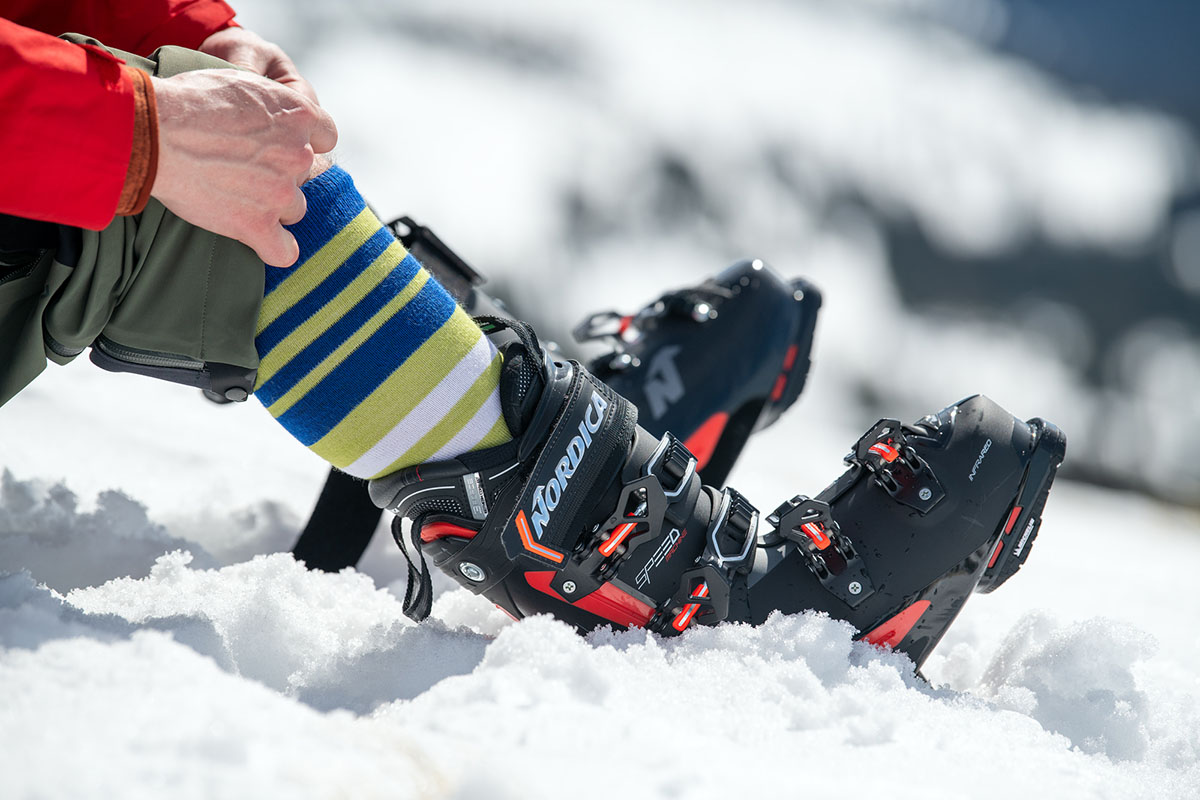
In addition to socks, one of the virtually of import and overlooked aspects of your ski kit is your boots, and this does relate to warmth. If your ski boots are as well tight, they can cut off circulation and make your toes grow cold and numb quickly (you lot'll see folks loosening the buckles on their ski boots in the elevator line to try and regain circulation and warmth). If they're likewise loose, in that location's extra room for cold air and they can become uncomfortable after a few runs. In the end, you want your boots to feel snug merely comfy (and keep in heed that your boot liners volition mold to your feet over time, or you lot can become them heat-molded when y'all buy them).
If possible, we recommend trying on multiple models before buying as each will have a unlike shape and overall feel. The all-time way to ensure a good fit is to visit your local outdoor store to get fitted in person, and if you're lucky, some ski-centric towns have adept bootfitters who are the best of the best. For example, our staff members and ski friends in Bedrock, Colorado, rave about Larry the Bootfitter, who has been in business for over 35 years and specializes in making sure your feet are as comfortable as possible inside your boots.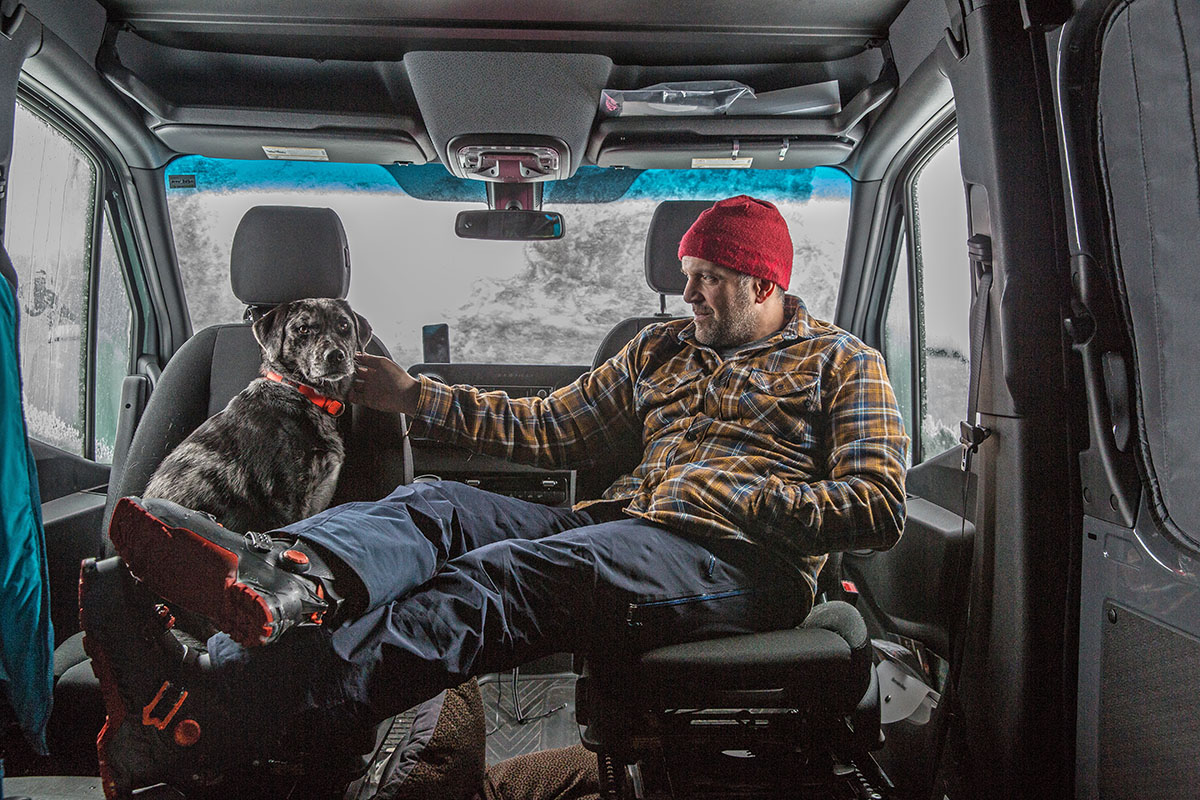
3. Go on Fingers and Toes Warm
Hand and Foot Warmers
Keeping fingers and toes warm is crucial for fending off the cold, and simple hand, foot, and toe warmers can be a nifty and affordable way to stay comfortable. These can be disposable and cheap (like Hot Hands), and some brands are now making biodegradable hand warmers, which we appreciate. To use, simply stuff them in your gloves or underneath your feet (using a flat, foot-specific model) for some added warmth—they typically final for around half-dozen to x hours, which is plenty for a day at the resort. And for those who want to take it to the side by side level, some companies likewise make heated socks and insoles (Hotronic is a leader in this category), heated boots (similar the K2 BFC 100 Estrus), and heated gloves/mittens (similar the Outdoor Research Prevail), although these often are quite pricey. In the end, we recommend trying warmers before making such a big investment. A terminal tip: If y'all have an extra warmer handy, stick it in the same pocket as your smartphone to go along the battery running longer.
Gloves vs. Mittens
On the topic of keeping your hands warm, you should also consider whether you prefer ski gloves or mittens. Gloves are the more popular choice for resort skiers due to their dexterity and ability to grip a ski pole, conform boots and bindings, etc. That said, mittens are improve insulators overall as your fingers warm each other. The downside is a major sacrifice in liberty of movement, but if you've already tried the glove-and-paw-warmer combination to no avail, mittens could be a good solution. And a possible best-of-both-worlds compromise for skiing is a three-finger glove (ane of our favorite models in this unique category is the Hestra Army Leather Heli 3-Finger), which has separate slots for your arrow finger and thumb but continue the others together. The divergence in dexterity isn't massive and y'all do exit your arrow finger vulnerable, but this is a viable option for cold-fingered skiers..jpg)
4. Protect Your Head and Ears
Fingers and toes are typically the starting time to get cold, just don't overlook head protection. Ski helmets accept hitting the mainstream at present, and in addition to providing condom in a crash, they are mostly quite warm and comfortable. That said, on very frigid days or for those who run cold (especially in the ears), y'all tin opt to add a thin beanie or balaclava underneath for a boost in insulation. But keep in mind that y'all desire to retain a snug fit to allow your helmet to practise its job, so avert bulky and overly thick knit hats.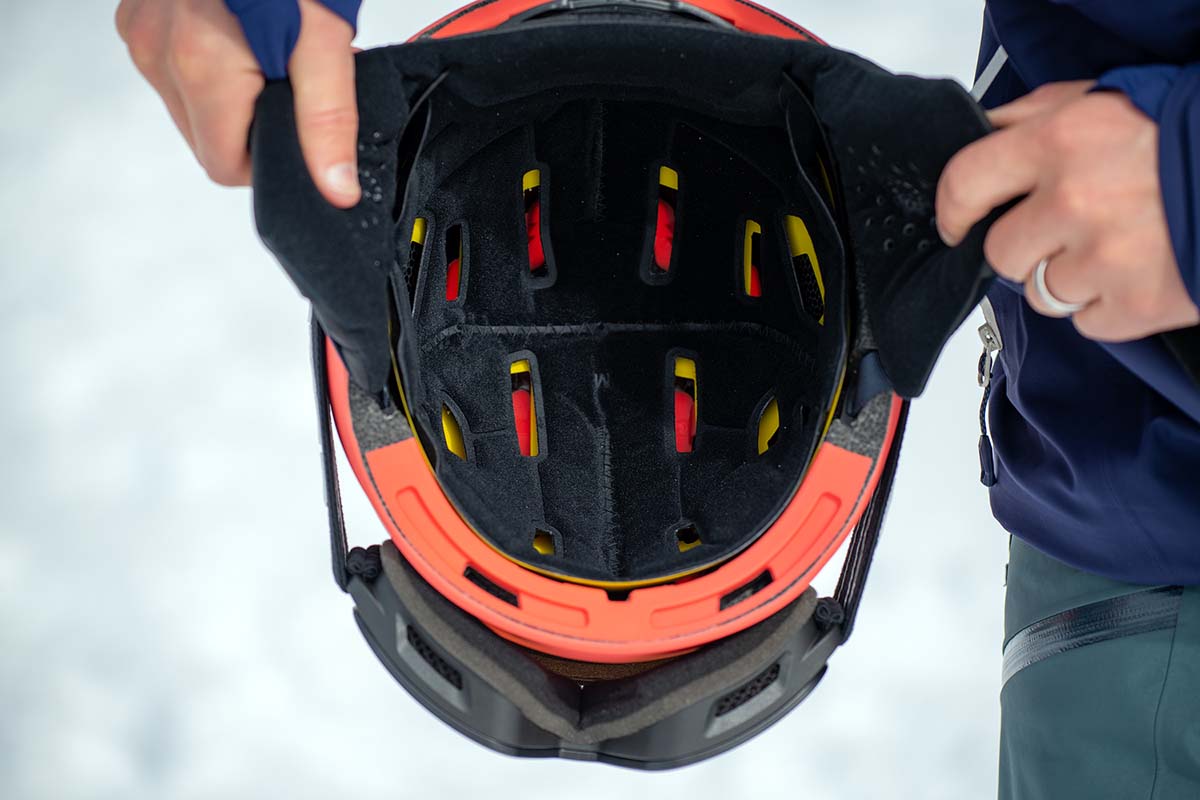
Some other ski helmet characteristic that factors into warmth is an adjustable ventilation system. Plant on high-finish lids like Smith's popular Vantage, these let you to open up the vents to avoid overheating and sweating as well much on the downhill or a sidecountry hike. This plays into warmth because standing in the lift line or riding the chair with moisture hair can quickly give you the chills. Plus, for when you want to retain as much rut as possible, information technology'due south quick and piece of cake to shut the openings. And a final tip: In wet and rowdy conditions, throw your waterproof ski jacket hood on over your helmet to provide yet another insulating layer to maximize condolement.
5. Cover Exposed Skin
Cold and wind tin can speedily creep in and arctic any bare skin, so it's important that your entire trunk is covered while skiing or waiting on a gusty chairlift. This means making sure that no bare skin is showing, which is easier said than done. For starters, ensure that your face is covered—ski goggles volition protect near of your upper face, but a balaclava or neck gaiter is a good manner to cover the lower one-half. If your nose and mouth become common cold, simply pull the gaiter up and over your exposed skin for added protection. Additionally, it's important to buy gloves or mittens that work with your ski jacket. Longer gauntlet-style ski gloves typically are the well-nigh constructive at sealing out cold. Shorter undercuff gloves, on the other hand, tuck into your ski jacket, which requires a flake more effort and tin permit in cold air if your sleeves ride up.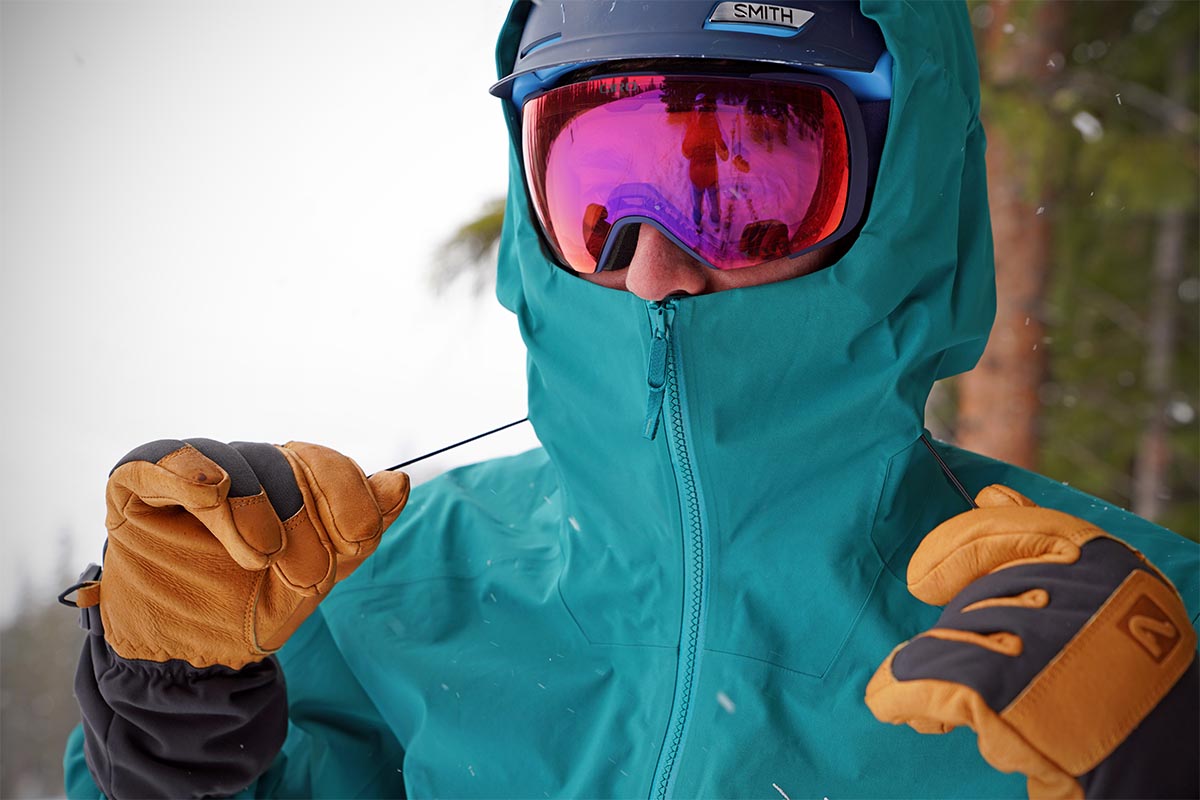
6. Go on Moving in the Elevator Lines
One of the quickest ways to abound cold is by continuing still in long elevator lines. Here, our all-time advice is to go on moving withal you can. Swing your arms, slide your legs dorsum and forth, do some squats—annihilation to increase claret menstruum and get your body in motion. Sure, you lot might look featherbrained, but information technology's improve than shivering on the chairlift and having potent limbs. And if you're still feeling chilled at the top of your adjacent run, put an emphasis on taking quick turns on the descent or opt for a trail with moguls or a catwalk that requires actress movement equally opposed to a standard groomer—this way your torso has to work a little (or a lot) harder and will generate some oestrus..jpg)
7. Swing by the Society
This ane sounds similar a no-brainer, just it'south like shooting fish in a barrel to go caught up in the excitement of fresh powder or a new section of the resort. But if you can't seem to get warm, it'south worth taking a pause in the club. Grab a hot beverage similar coffee or hot chocolate, fuel up with something (preferably warm) to eat, and take a seat by the fire. Your body needs the energy to go on moving, and it'll likely give you the morale heave you need to power through the rest of the day. If you ski with a backpack, you also can consider bringing along an insulated thermos with a hot drink or soup to savor mid-24-hour interval. It definitely beats a half-frozen Clif bar..jpg)
8. Dry Out Your Gear
When you're done skiing and if you lot plan to striking the slopes once again the next 24-hour interval, your commencement priority should be properly drying out your gear. First, remove your kick liners so they have plenty of fourth dimension to thaw. Next, shed all of your wet layers and unpack any items y'all take in your pack. If you have a fireplace or a wood stove, hang your gear nearby simply avoid setting it too close—fire and extreme heat can take a detrimental upshot on many materials. Otherwise, any spot that's warm and dry will do. If you have to drive to get to the resort the following morning, continue your boots, ski socks, and gloves near the floor heater to make sure they're every bit dry and warm as possible before heading out for the day.
Dorsum to Our Guide to Staying Warm Come across Our Ski Gear Reviews
Source: https://www.switchbacktravel.com/how-to-stay-warm-skiing
0 Response to "How To Keep Your Feet Warm While Skiing"
Post a Comment